
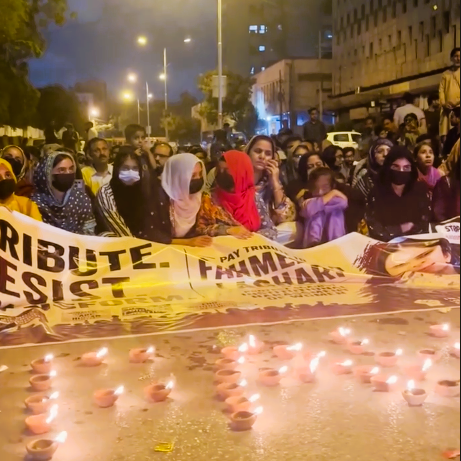
Aurat March, students and members of civil society gathered outside the Karachi Press Club to demand justice and accountability following the death of 21-year-old Fahmeeda Laghari, a medical student from Mirpurkhas.
According to protesters, Laghari had faced months of harassment, blackmail and threats within her educational institution. They alleged that her complaints were ignored and that the institutions responsible for protecting students failed to respond to the concerns she had raised.
On 9 April 2026, Laghari died, turning months of alleged harassment and institutional silence into a public demand for accountability.
Protesters called for those responsible to be held accountable and criticized what they described as a culture of impunity within educational institutions, where women and students can be forced to study in environments shaped by fear, coercion and intimidation.
The demonstration also framed Laghari's case as part of a wider pattern rather than an isolated incident. Speakers and participants demanded safer educational institutions and mechanisms through which complaints of harassment and threats can be investigated and acted upon.
“Kon si azaadi chahiye tum auratoun ko?” protesters asked, responding with demands for the freedom to live, study and live without fear.
The protest brought together mourning and resistance, with participants insisting that accountability and institutional change are necessary to ensure that women can pursue their education without intimidation or violence.